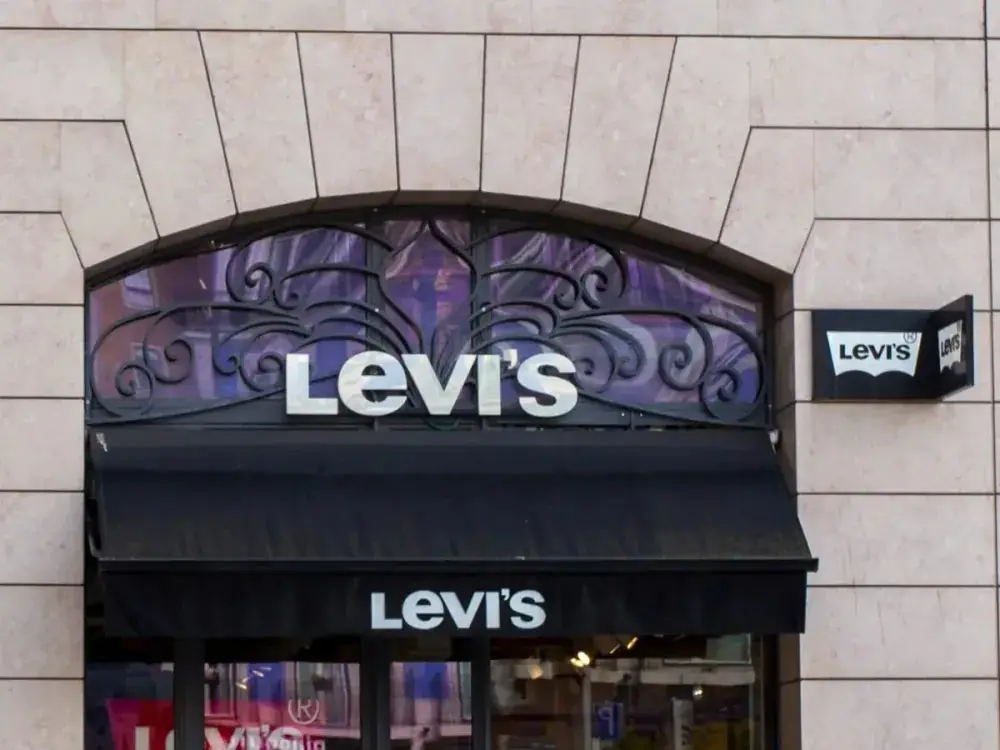
Levi Strauss & Co. surprised Wall Street for two very different reasons. The company delivered stronger-than-expected quarterly earnings and revenue, yet its stock moved sharply lower after the report. At first glance, the market reaction seemed difficult to explain.
The answer came from investors looking beyond the latest quarter. While Levi posted solid financial results, many focused on its outlook for the rest of the year. Even though management raised its forecasts, the updated guidance fell slightly below what analysts had hoped to see. That cautious outlook triggered a wave of selling despite several positive signs across the business.
Strong Quarterly Results Weren’t Enough

Revenue also reached $1.56 billion, representing an increase of 8% from the same period last year and topping the expected $1.52 billion.
Normally, results like these would support a stock price. Instead, Levi shares fell about 5.4% in after-hours trading before slipping nearly another 5.8% during premarket activity. Investors quickly shifted their attention from the company’s recent performance to its expectations for the months ahead.
Market reactions often depend more on future guidance than on current earnings. Investors buy stocks based on expected future growth, not simply past performance. Even strong quarterly numbers can disappoint if management projects slower growth ahead.
That appears to be exactly what happened with Levi. The company’s latest report showed healthy demand, but Wall Street wanted stronger signals that this momentum would continue throughout the rest of the fiscal year.
Guidance Became the Biggest Story
Levi raised its full-year adjusted earnings forecast to a range of $1.46 to $1.52 per share. While that represented an improvement over its previous guidance, the midpoint of $1.49 remained slightly below the analyst consensus of $1.51. That small difference mattered because investors had already priced in higher expectations.
Management also projected third-quarter revenue growth of about 4% to 5%. That marked a noticeable slowdown from the 8% growth reported during the second quarter. Investors interpreted this as a sign that sales growth could moderate during the second half of the year.
The company’s leadership did not describe weakening demand. Instead, executives presented a measured outlook that reflected a more balanced view of upcoming business conditions. Even so, cautious forecasts often create short-term pressure in the stock market.
Michelle Gass Stays Focused on the Bigger Picture

Her strategy moves the company beyond its long-standing identity as primarily a jeans manufacturer. Instead, Levi wants customers to think of the brand as a complete denim lifestyle company. That means expanding into tops, dresses, skirts, outerwear, and other apparel that encourages shoppers to build entire outfits around the Levi name.
The strategy is already showing measurable progress. During the latest quarter, products outside traditional denim bottoms generated roughly one-third of the company’s overall sales growth. That diversification reduces dependence on one product category while creating new opportunities for future expansion.
Gass believes those categories will continue supporting growth through 2026 and beyond. Broadening the product lineup also helps Levi attract new customers while encouraging existing shoppers to purchase more than just jeans.
One of the strongest highlights from Levi’s quarterly report came from its direct-to-consumer business. For the first time in company history, direct sales represented 51% of total revenue, moving ahead of the traditional wholesale channel.
Online shopping also continued to deliver impressive growth. E-commerce revenue climbed 19% compared with the same period last year. Customers increasingly choose Levi’s website and digital platforms when purchasing clothing, giving the company greater control over pricing, inventory, and customer relationships.
Physical stores also performed well. Comparable store sales increased 6%, extending the company’s streak to 17 consecutive quarters of comparable sales growth. Strong store traffic suggests shoppers continue visiting Levi locations despite broader concerns about consumer spending.