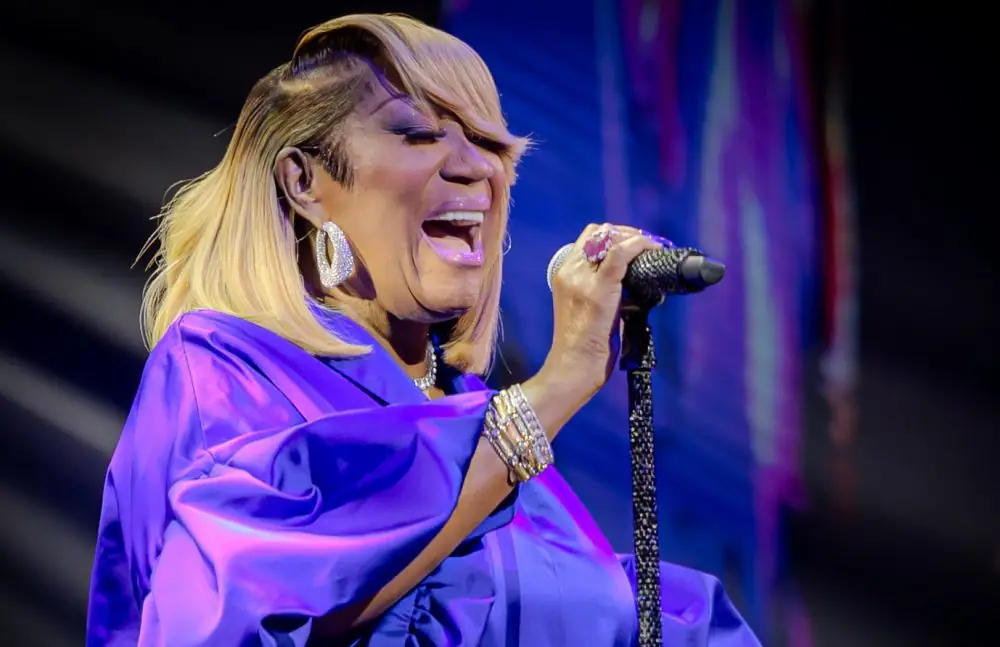
Patti LaBelle has spent more than six decades earning praise for one of the most powerful voices in music. Yet her latest performance has people talking for a very different reason. The legendary singer became the center of a heated debate after performing the U.S. national anthem before the 2026 MLB All-Star Game in Philadelphia.
The performance took place on July 16 at Citizens Bank Park, where thousands of fans gathered for one of baseball’s biggest nights. While many inside the stadium applauded as fireworks lit up the sky and military jets passed overhead, the conversation quickly shifted online. Within minutes, social media filled with strong opinions from viewers who either loved her soulful take or believed she crossed a line.
LaBelle, 82, delivered “The Star-Spangled Banner” in the style that has defined her career. She stretched notes, added signature vocal runs, and used gospel-inspired phrasing that gave the anthem a deeply personal feel. Her version sounded unmistakably like Patti LaBelle, and that became the biggest talking point of the night.
For many viewers, that artistic approach did not fit the occasion. Critics argued the anthem carries a special meaning that should remain unchanged during major public events. Some called the performance disappointing, while others said personal interpretation took attention away from the song’s ceremonial purpose. Several social media posts praised LaBelle’s talent but insisted the anthem should be performed as written.
The Real Source of the Backlash
Her voice remained strong, and there were no obvious performance issues. Instead, the backlash focused almost entirely on her creative choices and musical style.
That difference matters because it shifts the conversation away from singing ability. The criticism centered on whether an artist should reshape a song that many Americans view as a national symbol. Some viewers believed every extra vocal flourish changed the mood of the anthem. Others felt those same moments reflected genuine emotion rather than disrespect.
The debate also revived a familiar question that returns almost every time a high-profile singer performs the anthem. Should artists simply recreate the traditional version, or should they bring their own voice and personality to the performance? There is no official rule that settles the issue, which explains why reactions often become so passionate.
Supporters Saw a Different Story
Not everyone viewed the performance negatively. Many fans praised LaBelle for staying true to the style that made her a music icon. They argued that asking an artist known for soul and gospel influences to sing without emotion would erase the very qualities that earned her legendary status.
Supporters also pointed out that LaBelle approached the anthem with sincerity and respect. They saw her vocal choices as an expression of pride rather than an attempt to rewrite a patriotic tradition. To them, the performance celebrated both the song and the city where LaBelle was born and built her remarkable career.
That support highlighted a growing divide in public opinion. One group believes the national anthem should remain consistent every time it is performed. Another believes music naturally allows room for personal expression, especially when it comes from a respected performer with decades of experience.
Why Anthem Performances Always Spark Conversation?
Every note carries extra weight, especially during major sporting events watched by millions. Even small changes in tempo or vocal style can trigger strong emotional reactions.
History shows that memorable anthem performances often become bigger stories than the games themselves. Some are celebrated for their creativity, while others face immediate criticism. Patti LaBelle’s appearance now joins that long list, not because of a vocal failure, but because it reopened the debate over tradition and artistic freedom.